Commercial dumpster rental: roll-offs for job sites and businesses
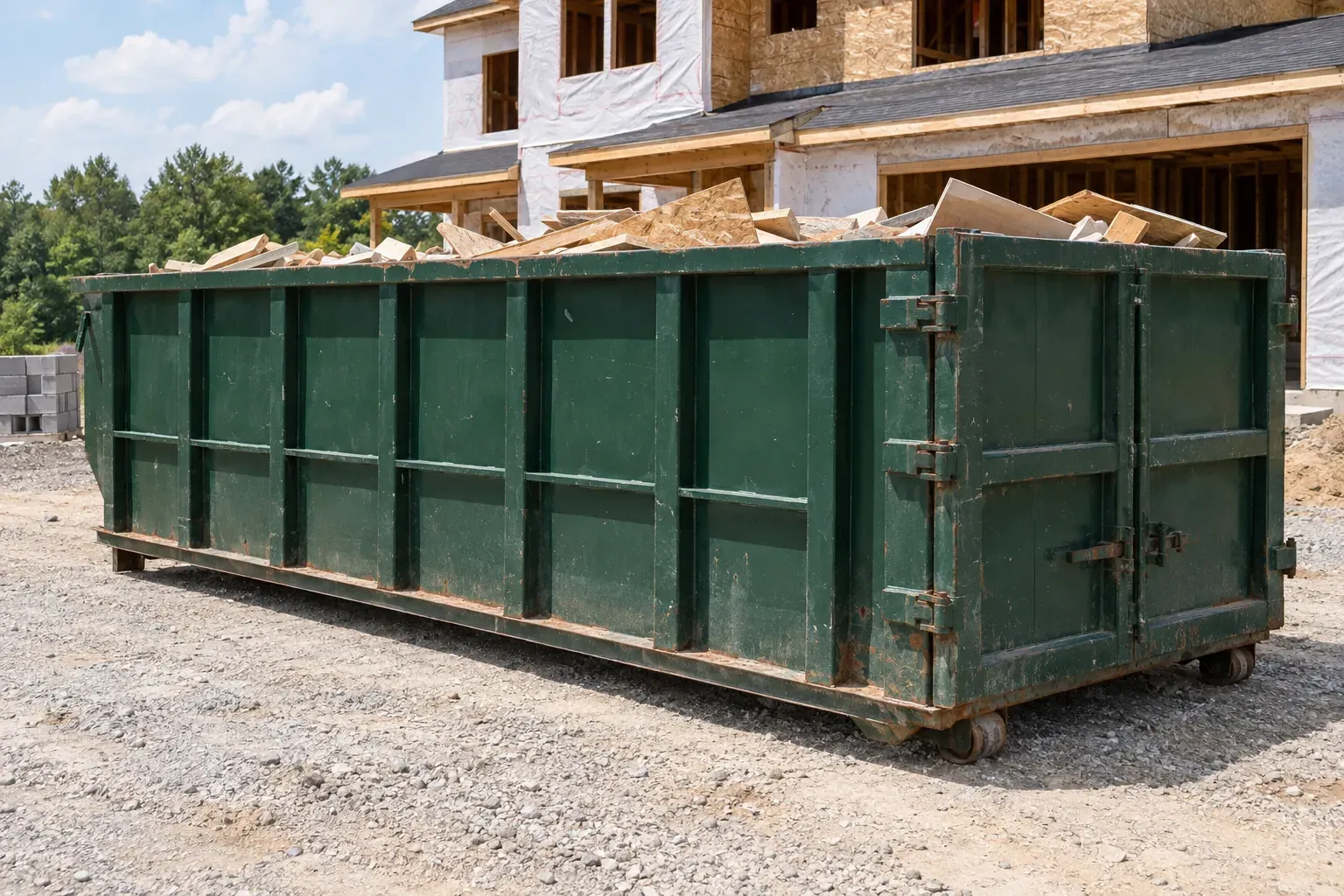
Commercial dumpster rental through Dumpster Dingo means a 20, 30 or 40-yard roll-off on your site, swapped when it fills, on a rental that runs as long as the job. One request, one vetted local hauler, one all-in price from a real person, and one contact for every swap after that.
We book temporary roll-off containers. The permanent 2 to 8-yard front-load dumpsters a restaurant empties weekly are a different service. More on that below.
Who this is for
- General contractors running remodels, additions, gut renovations and new builds
- Roofing, demolition, flooring and restoration crews
- Property managers turning over units or clearing a vacated space
- Retail and office tenants doing a build-out or closing a location
- Anyone who needs a dumpster rental company that keeps several jobs straight
Homeowners hiring a contractor should read the residential dumpster rental page. For teardowns, see the demolition dumpster page.
Sizes for commercial jobs
Most commercial work lands in a 20 to 40-yard; the 30 is the usual starting point. All three share a 22 x 8 foot footprint and differ only in height.
| Size | Outside dimensions | Holds | Weight included | Typical 7-day price |
|---|---|---|---|---|
| 20-yard | 22 x 8 x 4 ft | about 6 pickup loads | 1 to 2 tons | $375 to $650 |
| 30-yard | 22 x 8 x 6 ft | about 9 pickup loads | 3 to 4 tons | $450 to $800 |
| 40-yard | 22 x 8 x 8 ft | about 12 pickup loads | 3 to 4 tons | $525 to $950 |
Typical 7-day ranges, not quotes; long rentals and high-cost metros can go above them. Your exact price comes with your quote. Breakdown on the pricing page.
- 20-yard for a tenant build-out, a unit turnover, or a tight lot. Two swaps of a 20 can beat one 40.
- 30-yard for additions, gut renovations and most multi-week jobs.
- 40-yard for new construction and bulky, light debris: framing offcuts, packaging, cabinets, insulation.
- 10-yard heavy-debris box alongside any of these for concrete, block, brick, dirt and asphalt. Heavy material never goes in the big box. See concrete and dirt.
Swaps, long rentals and multi-site work
A commercial dumpster service lives or dies on the swap. How we run them:
- Rental length. Choose 3, 7, 14 or 30 days. Multi-week builds go on a 30-day rental, with extra days billed at the daily rate in your quote, typically $10 to $20. If the job will run past 30 days, tell us in the quote request and we confirm how the rental continues, in writing, before you book.
- Swaps. The full box goes, an empty one lands, each swap priced in your quote before you book. Give 24 hours notice where you can; same-day swaps depend on the local hauler.
- Early pickup. Finished early? Tell us and we pull it. Unused days are not refunded.
- Multiple sites. Send the addresses and each job gets its own hauler if needed and its own invoice.
One invoice per job
Every booking gets one invoice with the job address on it, for clean pass-through billing. Nothing is charged when you book: the rental price is charged the day before delivery, and usage charges (overweight, extra days, item fees) are billed after pickup from the scale ticket. If repeat work needs different billing, tell us in the quote request and we confirm what we can set up, in writing, before you book.
What goes in a commercial roll-off, and what cannot
Fine: drywall, lumber, framing, cabinets, countertops, flooring, carpet, fixtures, doors, windows, insulation, roofing, packaging and furniture.
Needs its own 10-yard: concrete, block, brick, asphalt, dirt, rock and more than a little tile. These push a construction load over weight at $50 to $125 per ton.
Not allowed: paint and solvents, chemicals, tires, batteries, fridges, freezers and AC units, propane and fuel, asbestos, and electronics in many states. The prohibited items page lists what to do with each.
Placement and permits on a commercial site
The box needs a flat spot about 22 feet long and 8 to 11 feet wide, roughly 60 feet of straight approach, and clear overhead. In a strip-mall lot, cone off the spaces the night before.
On private property you do not usually need a permit. On the street or a public alley, most cities require a right-of-way permit. We tell you what applies at the address. Ask for boards under the rails on finished asphalt; surface damage is covered in our booking policies.
Roll-off vs front-load: what we do not offer
A roll-off is the open-top box a truck slides onto your site, 10 to 40 yards, rented for days or weeks and hauled away full. That is what this page is about.
A front-load dumpster is the 2 to 8-yard lidded steel bin that sits permanently behind a restaurant or office and is emptied weekly by a truck with forks. That is a recurring waste contract with a local licensed hauler, and it is not a service we offer. Need a container for a project with a start and an end? You are in the right place. A full comparison is in our guide to 2, 3 and 4 yard front-load dumpsters.
How it works in three steps
- Tell us the job. Site address, size, debris type, start date, how long, and whether you expect swaps. The quote form takes about a minute.
- Get one exact price. A real person checks which vetted haulers serve the address and sends one all-in number by text or email, swaps and overage rates written down. We usually reply within 1-2 business hours.
- Say yes and build. Delivery in 1 to 3 business days or on your date. Swaps and extensions go through us. When the punch list is done, tell us and it is gone.
The full process is on how it works.
A worked example
A contractor is gutting a 2,400 sq ft office suite to the studs: drop ceiling, carpet, partition walls, and a slab cut for new plumbing. Four weeks, crew of five.
Our plan: a 30-yard on a 30-day rental, typically $450 to $800 for the first 7 days plus the monthly rate in the quote, with two swaps, one around demo week and one at final cleanup. The slab cut goes in a separate 10-yard heavy-debris box, typically $325 to $550. Ceiling tile and carpet are bulky but light, so the 3 to 4-ton allowance is comfortable. Both boxes go on one invoice for the job, with the suite address on it.
Why contractors book through us
- Vetted, insured and bonded haulers. Every one of our haulers shows a current certificate of insurance and a bond before taking a job. How we vet haulers.
- One number, in writing, before you commit. Rental, allowance, per-ton overage, extension and swap price are all in the quote. Nothing is booked until you say yes.
- One point of contact for every job. A swap on Tuesday, a new site on Thursday: text us and we handle the haulers.
See locations for the metros we cover.
Get your exact price
Tell us your ZIP and what is going in. A real person texts or emails one all-in delivered price.
Get my priceFrequently Asked Questions
Do you offer front-load dumpsters for weekly pickup?
No. We book temporary 10 to 40-yard roll-offs for projects. Permanent 2 to 8-yard front-load bins on a weekly route are a service contract with a local licensed hauler.
Can I get a dumpster rental for contractors on an ongoing basis?
Yes, job by job. Many contractors send us every new site as it starts; each gets its own quote and invoice from the same contact. If you want one standing setup across jobs, say so in the quote request and we confirm what we can set up, in writing, before you book.
How fast can a commercial dumpster be delivered?
Usually 1 to 3 business days, often next day. Need it faster? The same-day dumpster rental page explains how to improve the odds.
What is the weight limit on a 30 or 40-yard?
Typically 3 to 4 tons, stated exactly in your quote, with overage at about $50 to $125 per ton. Keep concrete out of the big box and weight is rarely a problem. Our weight limits guide has the math.
Can you deliver to a site with no one there?
Yes. Mark the spot with cones or paint and leave gate codes and a site contact in the quote form. A blocked spot on delivery or swap day means a $75 trip fee.
Do I need a permit for a dumpster on a commercial lot?
Not on private property. On the street or sidewalk, most cities require a right-of-way permit, and some want a traffic control plan for larger boxes. We tell you what applies.
Sources and review
Written by Rob Whitaker and the Dumpster Dingo Team. First published ; figures last checked . Sizes and weights are typical figures, not quotes: your written quote has the final word. How we write and check our guides. Spotted a mistake? Tell us.
Get your exact delivered price
Send the address and the job; a real person sends one all-in price back.