Dumpster rental for moving
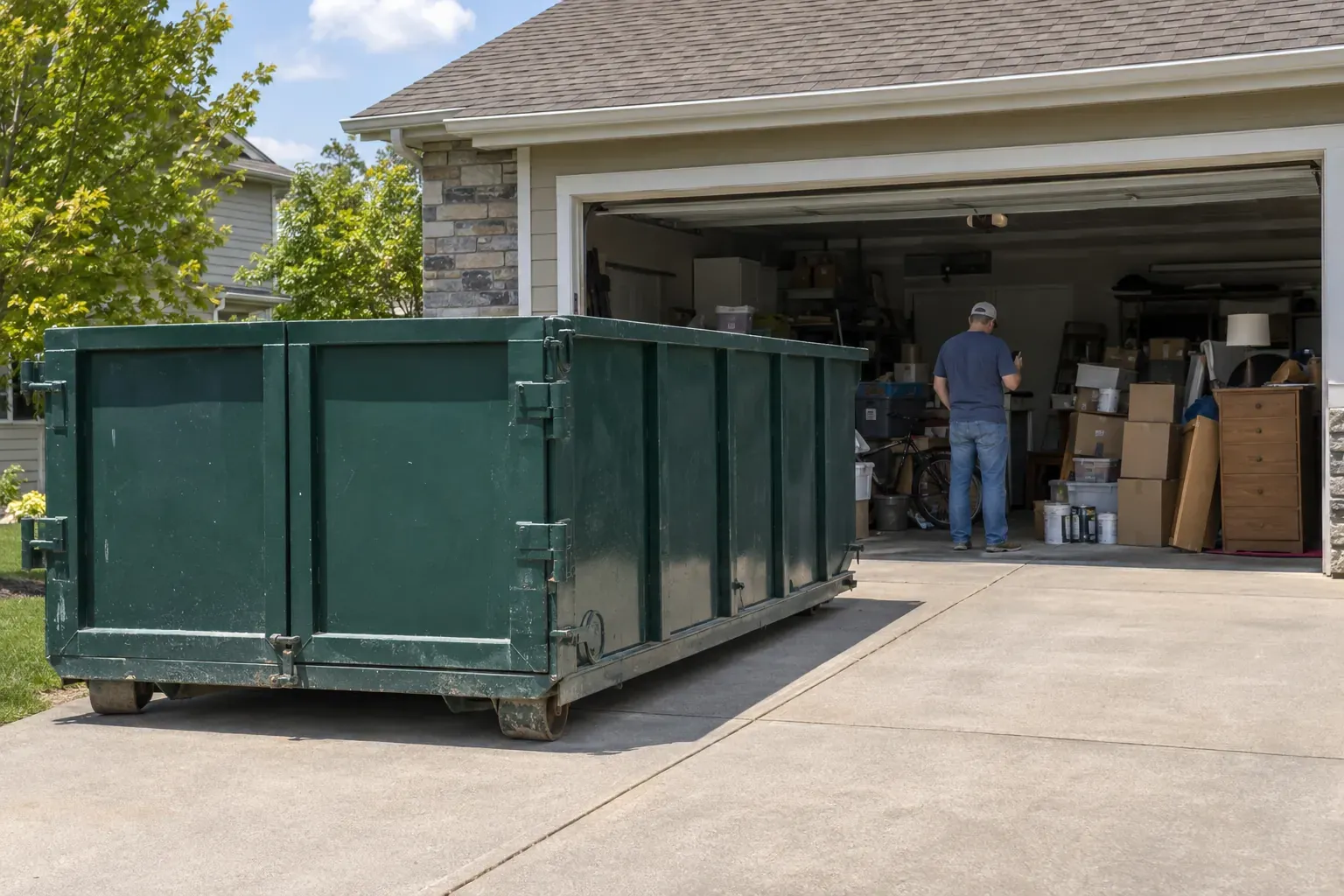
Movers charge by weight, volume or hours, and every one of those goes up with the stuff you were going to throw out anyway. A moving dumpster rental in the driveway the week before the truck lets you purge the garage, basement and closets in one pass, so you pay to move only what you want. We book a vetted local hauler for you, a real person texts you one all-in price, and the box is gone before the truck needs the driveway.
Who this is for
- Families moving out of a house they have lived in for years
- Downsizers going from a house to a condo or a retirement community
- Renters and landlords clearing a unit at the end of a lease
- Anyone who got a quote from a mover and wants to shrink it
If the house belonged to someone who has passed, see the estate cleanout page. For a garage or basement with no move attached, see home cleanout.
Sizes for a move
A dumpster for moving is usually a 10, 15 or 20-yard. You are skimming the part you do not want, and that is less than people expect until they open the garage.
| Size | Outside dimensions | Holds | Weight included | Typical 7-day price |
|---|---|---|---|---|
| 10-yard | 12 x 8 x 3.5 ft | about 3 pickup loads | 1 to 2 tons | $325 to $550 |
| 15-yard | 16 x 8 x 4 ft | about 4 to 5 pickup loads | 1 to 2 tons | $350 to $600 |
| 20-yard | 22 x 8 x 4 ft | about 6 pickup loads | 1 to 2 tons | $375 to $650 |
Typical 7-day prices, not quotes. Your exact price comes with your quote; the pricing page explains what is included.
- 10-yard: an apartment, a condo, or a house where you are mostly tossing closet contents and a piece or two of furniture.
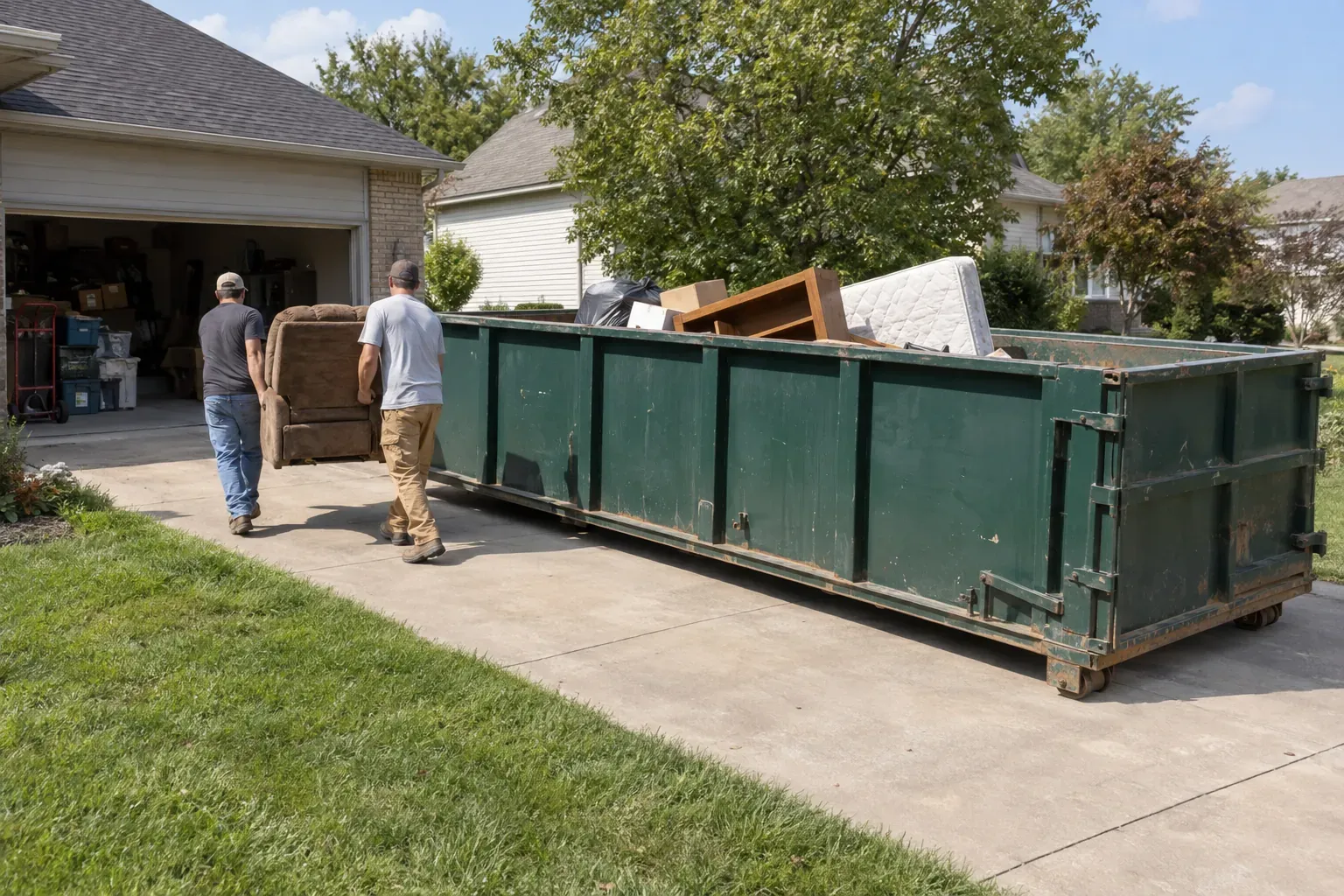
- 15-yard: a typical family house with a garage that needs thinning: a worn sofa, a mattress or two, broken patio furniture.
- 20-yard: a big house, a long tenure, or a basement or attic in the mix.
Downsizers often need more than they think: going from 2,400 sq ft to 1,100 means a third of the furniture is not coming. Between sizes, go up; a second haul costs more than the next size. All five sizes are on the dumpster sizes page.
Timing it with the moving truck
The box and the truck both want the driveway. Run it like this:
- Deliver 7 to 10 days before the move. Delivery is usually 1 to 3 business days after you say yes, so request the price about two weeks out. That gives you a week of evenings and a weekend to purge.
- Load room by room as you pack. Pack a box to keep, toss a box to go. One pass beats two sweeps.
- Schedule pickup for the day before the movers. If they come Saturday, have the box picked up Thursday or Friday so a late pickup cannot collide with them.
Say the move date in the quote request and we book the pickup date up front. Pickups that run late are not charged as extra days.
Apartment, condo and HOA placement
Houses are simple: the driveway, no permit in most places. Apartments and condos take planning.
- Apartments. Ask the property manager where a roll-off can go; many complexes will cone off a few parking spaces. Get it in writing, with the dates. A 10-yard fits in about two spaces.
- Condos and HOAs. Most associations allow a dumpster with notice; some limit it to a few days or a specific pad. Ask the board a week or two ahead.
- Street placement. With no private spot, most cities require a right-of-way permit, from free to over $100. We tell you what applies.
Every size needs a flat spot about its own length, 8 to 11 feet wide, and roughly 60 feet of straight approach, with no low wires. Ask for boards under the rails; surface damage at a spot you chose is generally on you unless the hauler was negligent, per our booking policies.
What goes in a moving dumpster, and what cannot
Fine: worn furniture, mattresses (often a $25 to $75 per-item fee), broken shelving, old rugs, boxes of unwanted goods, clothing, toys, patio furniture, bikes, lawn equipment with the fuel drained.
Better elsewhere: anything in good shape. Charity pickups and buy-nothing groups take furniture and housewares within days, which keeps the box for the real junk.
Not allowed: paint, chemicals, gasoline and propane (return the grill tank), tires, batteries, fridges, freezers and window AC units, and electronics in many states. Movers will not take most of these either, so they need a plan: most counties run a hazardous waste drop-off. The prohibited items list has the full rundown.
How it works in three steps
- Tell us the job. ZIP, move date, size (or let us suggest one), what is going in, and where the box will sit. About a minute on the quote form.
- Get one exact price. A real person checks vetted haulers near you and sends one all-in number by text or email, mattress fees written down. We usually reply within 1-2 business hours.
- Say yes, purge, move. The box lands on your date. Load it as you pack. Tell us when it is full and it is gone before the movers arrive.
More on how it works.
A worked example
A family of four is moving from a four-bedroom house they have owned for twelve years into a smaller home two states away. The mover's estimate came in by weight, and the garage has a broken treadmill, a sagging sectional, two old mattresses, and a wall of boxes nobody has opened since the last move.
Plan: a 15-yard delivered the Friday ten days before the move, on the driveway on boards, typically $350 to $600 for 7 days with 1 to 2 tons included. The two mattress fees are listed in the quote. They load the garage over the first weekend and the closets over the week, break down the sectional so it lies flat, and text us Thursday. Pickup is Friday; the moving truck backs in Saturday to a clear driveway and a lighter load. Had the basement been part of it, we would have quoted a 20-yard at $375 to $650.
Why movers-to-be book through us
- Vetted, insured and bonded haulers. Every one of our haulers shows a current certificate of insurance and a bond before taking a job. How we vet haulers.
- One all-in price, in writing. Rental days, weight allowance, item fees and the daily rate for extra days, all in the quote.
- One point of contact. Move date slipped? Need the box out early? Text us and we sort it with the hauler. One invoice per job.
Your metro is on the locations page. Need a box at the new place too? We quote both.
Get your exact price
Tell us your ZIP and what is going in. A real person texts or emails one all-in delivered price.
Get my priceFrequently Asked Questions
What size dumpster do I need for moving?
A 10-yard for an apartment or a light purge, a 15-yard for a typical family house with a garage to thin, and a 20-yard for a large house or a basement or attic. Between sizes, go up.
How far ahead should I book a dumpster for a move?
About two weeks before the move. Delivery is usually 1 to 3 business days after you confirm, and you want the box on site 7 to 10 days before the truck. Spring and summer weekends are busy.
Can I get a dumpster at an apartment complex?
Usually, with the property manager's approval on the spot and dates. A 10-yard takes about two parking spaces. Get it in writing and put the instructions in your quote request.
What happens if my move date changes?
Moving the delivery date is free, however late you tell us. After delivery, text us to adjust the pickup date; extra days bill at the rate in your quote, and early pickups are no problem. See booking policies.
Can I put a mattress in a moving dumpster?
In most areas, yes, with a per-item fee of about $25 to $75 because landfills charge extra. A few cities require mattresses to be recycled instead. Tell us how many and the fee goes in the quote.
Other projects


Sources and review
Written by Rob Whitaker and the Dumpster Dingo Team. First published ; figures last checked . Sizes and weights are typical figures, not quotes: your written quote has the final word. How we write and check our guides. Spotted a mistake? Tell us.
Get your exact delivered price
Tell us your ZIP and move date; a real person sends one all-in price back.