Dumpster rental for storm cleanup
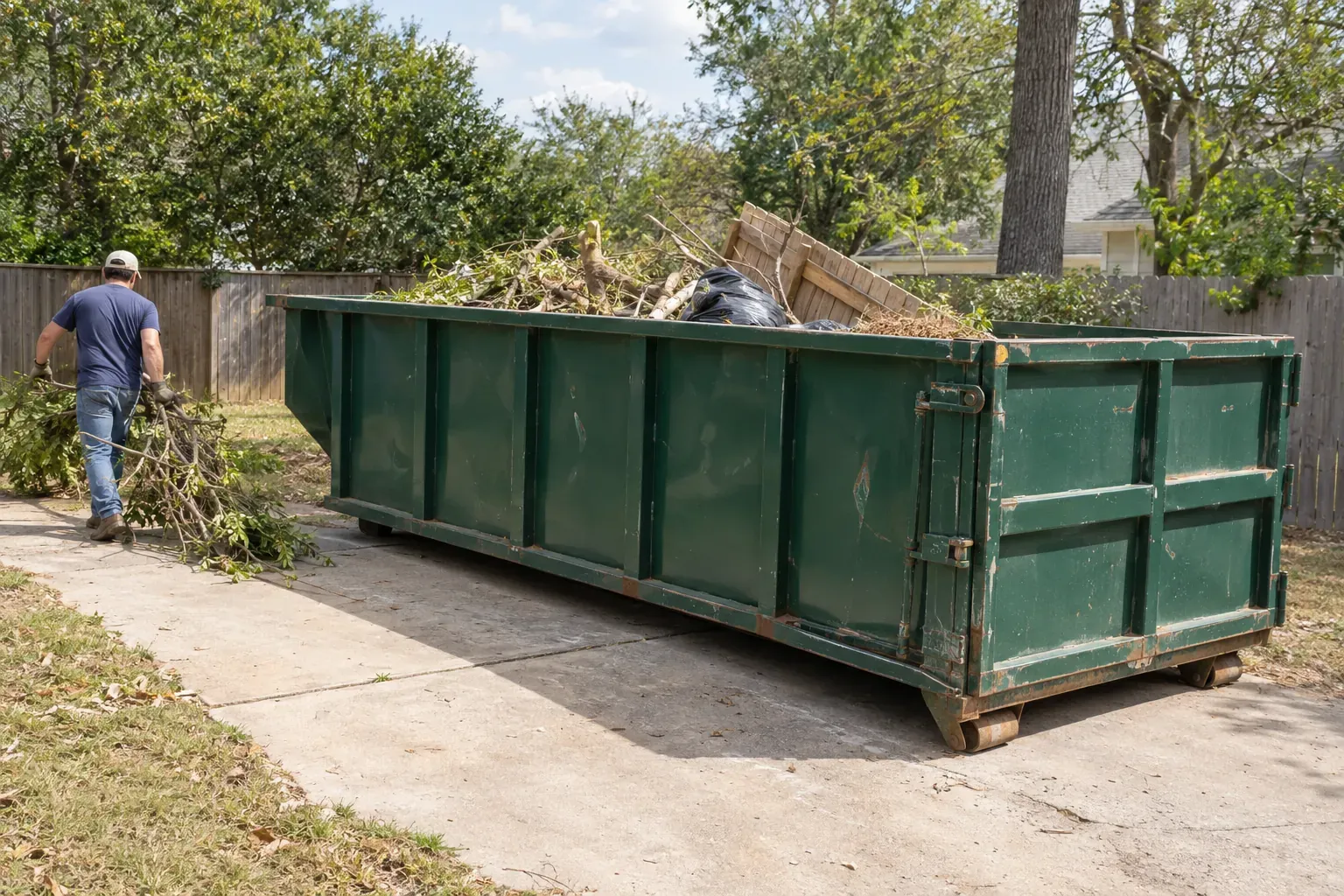
After a storm the yard is full of limbs, the fence is in the neighbor's pool, and if water got in, the drywall has to come out before it grows mold. A storm cleanup dumpster rental takes all of it in one or two loads. The catch: the week after a big storm is the hardest week of the year to get one, so request early. We book a vetted local hauler for you, send one all-in price, and tell you plainly what date is possible.
Who this is for
- Homeowners clearing downed limbs, shrubs and a wrecked fence after wind
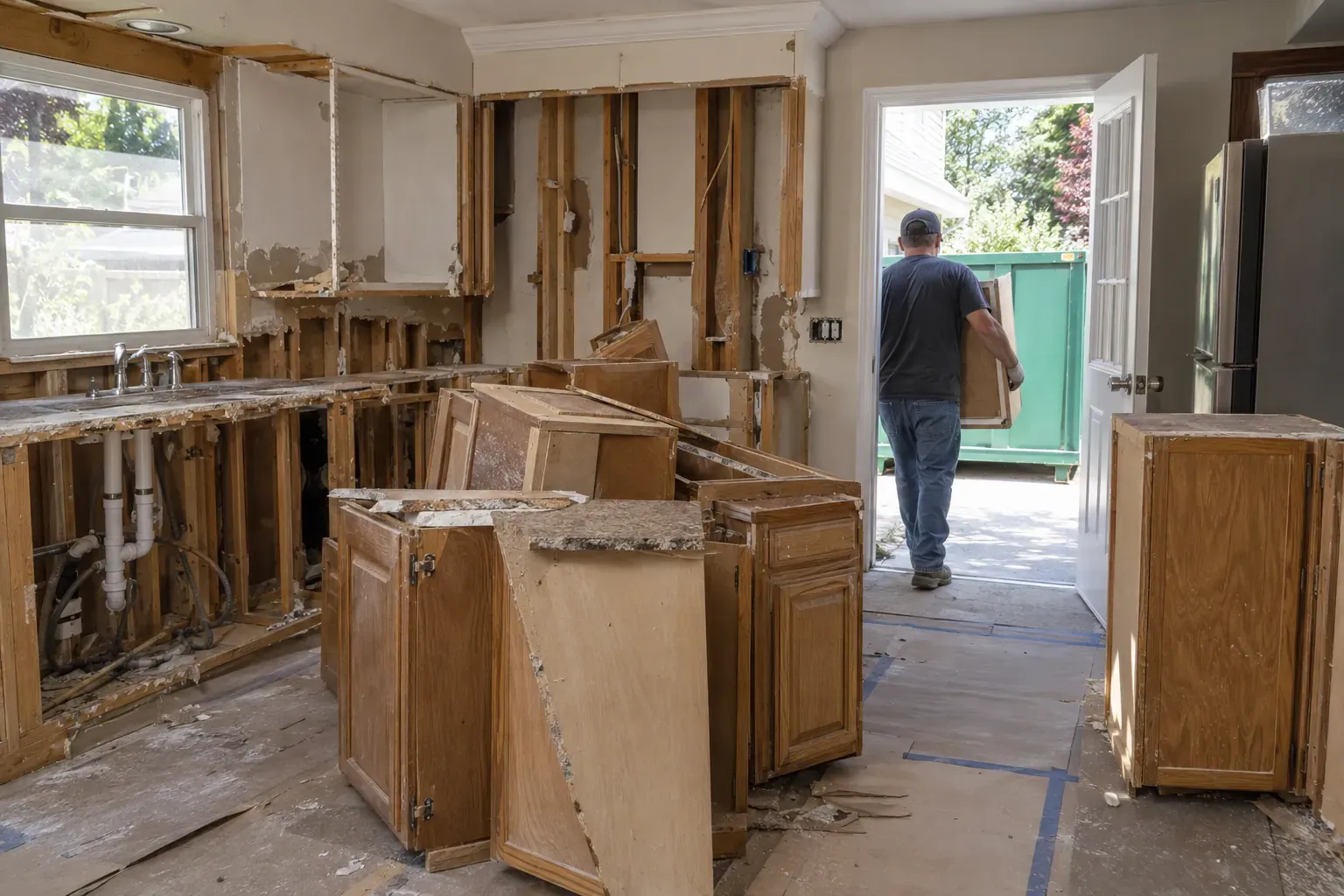
- Families gutting wet drywall, flooring and furniture after a flood or roof leak
- Hurricane and tornado debris where the structure is standing
- Restoration contractors who need a box before the dry-out
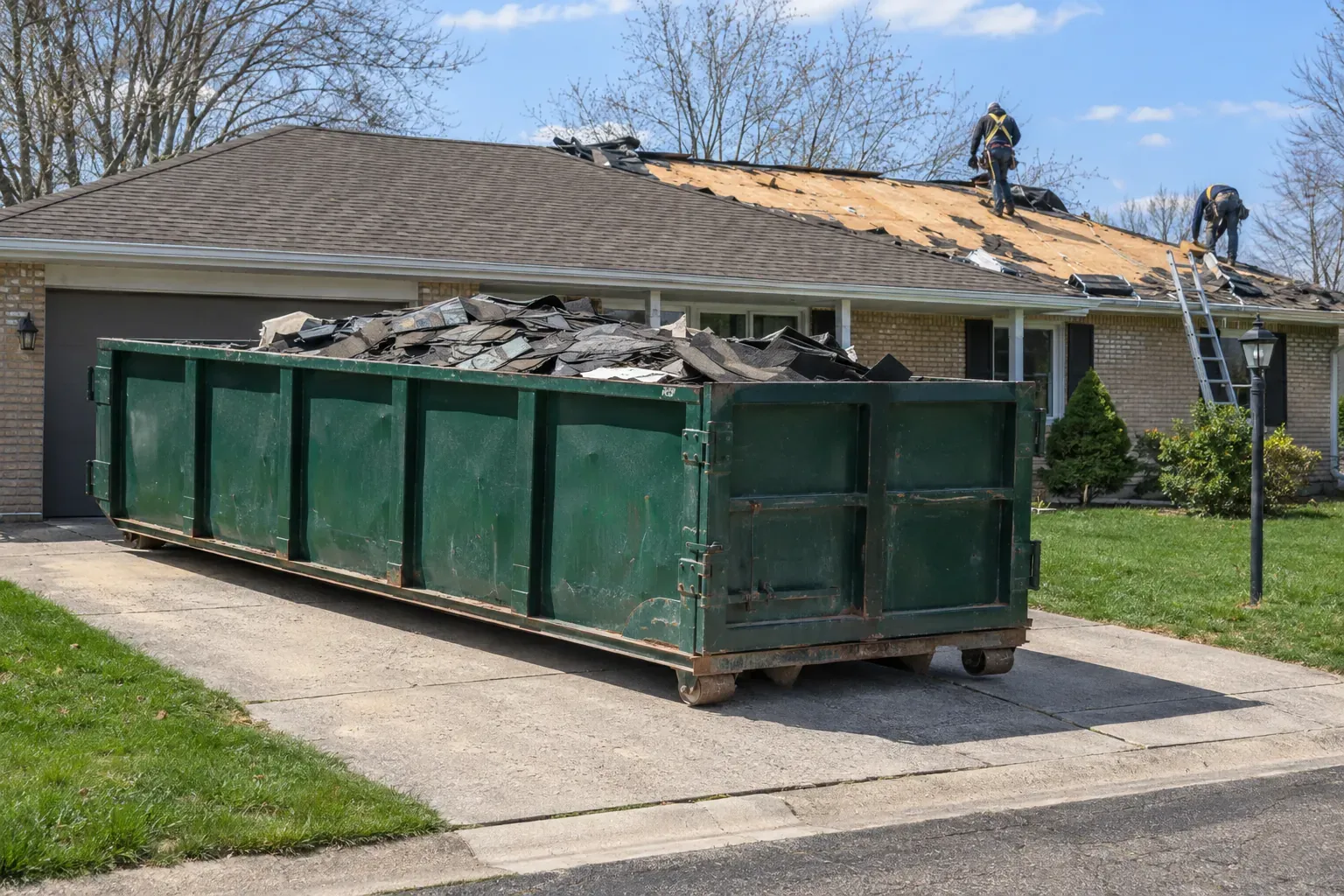
For a rebuild, see demolition; roof replacements are on the roofing page.
Yard waste vs construction debris: it matters for the price
Storm debris is two different loads to a landfill, and mixing them can cost you. Yard waste is limbs, brush, leaves, shrubs and small stumps. In many counties it is composted, not landfilled, so it has to go in its own load with no trash in it, and a clean load is often cheaper. Large root balls are heavy and not every site takes them.
Construction debris is everything from the house: wet drywall, insulation, carpet, flooring, fence boards, shingles, siding, ruined furniture. It goes to a landfill at the mixed-debris rate. With a lot of both, two loads is usually cheaper than one mixed load, and we price it both ways. Soil and concrete need a 10-yard; see concrete and dirt.
Flood debris is heavy. Soaked drywall and carpet often weigh a good deal more than the same material dry. Tell us it is flood debris so the allowance and per-ton rate (typically $50 to $125) fit. Let material dry if you can, and keep the box tarped in rain.
Sizes for storm debris
| Size | Outside dimensions | Holds | Weight included | Typical 7-day price |
|---|---|---|---|---|
| 20-yard | 22 x 8 x 4 ft | about 6 pickup loads | 1 to 2 tons | $375 to $650 |
| 30-yard | 22 x 8 x 6 ft | about 9 pickup loads | 3 to 4 tons | $450 to $800 |
Typical 7-day prices in normal conditions, not quotes; after a major storm your price may sit higher in the range. Your exact number comes with your quote; see pricing.
- 10-yard, $325 to $550: a small yard of limbs, or one flooded room. Also the only box for soil and concrete.
- 20-yard: a typical yard after a windstorm plus a section of fence, or a flooded basement. Our usual pick.
- 30-yard: several downed trees, a whole fence line, or a gutted first floor.
- 40-yard, $525 to $950: large-property hurricane debris, with swaps.
Brush loads fill early because branches do not lie flat; cut limbs to 4 to 6 feet and stack them parallel. More tips on the yard cleanup page; all sizes on the dumpster sizes page.
What cannot go in
Everything listed above is fine, including ruined furniture and mattresses (often a per-item fee). Not allowed: paint, fuel and propane (a flooded garage usually has both), chemicals, tires, batteries, fridges, freezers and AC units, electronics in many states, and asbestos in older homes. Many counties open temporary hazardous waste collection after a disaster; the prohibited items page lists alternatives.
Insurance documentation before you toss anything
Your adjuster wants proof, and the dumpster is where proof goes to disappear. Before loading, photograph and video every room and the yard, including the water line on the wall. Photograph damaged items individually with serial numbers visible, and keep a simple inventory: item, age, replacement cost. Ask your adjuster whether they need to see anything in person first. Keep the dumpster invoice: debris removal is covered under many homeowner policies, and one invoice with the property address is what the claim needs.
Demand spikes after a storm: book early
The week after a hurricane or major flood, every hauler in the region has every box out. How to get ahead:
- Request before the storm if you can. In a forecast path, ask for a price for the day after. Nothing is booked until you say yes, and cancelling is free until the truck leaves for your delivery.
- Or request the morning after. Same-day is unlikely in a disaster zone; next-day and two-day are often possible if you are early in the queue. See the same-day dumpster rental page.
- Be flexible on size. Say "20 or 30, whichever is available first."
- Check for municipal curbside pickup. Many cities collect limbs and brush free after a declared event.
We tell you the realistic date before you commit.
Placement and permits
The box needs a flat spot about its own length, 8 to 11 feet wide, about 60 feet of straight approach, and clear overhead; check for downed wires. Saturated ground will not hold a loaded roll-off, so use the driveway, on boards. Your driveway needs no permit in most places; the street usually needs a city permit, though some cities suspend it in an emergency. Surface damage at a spot you chose is generally your responsibility unless the hauler was negligent, per our booking policies.
How it works in three steps
- Tell us the job. ZIP, what the storm left (yard, house, or both), whether anything is flooded, and where the box will sit. About a minute on the quote form.
- Get one exact price and a real date. A real person checks which vetted haulers near you have a truck free and sends one all-in number with the earliest realistic delivery. We usually reply within 1-2 business hours.
- Say yes and clear it out. Load it over the 7-day rental, or longer if you booked 14 or 30 days. Text us for a swap or pickup.
More on how it works.
A worked example
Straight-line winds drop two oak limbs across a backyard, flatten 60 feet of fence, and tear shingles off a corner of the roof, letting rain into one bedroom. Carpet and the bottom 4 feet of drywall have to come out.
Plan: a 20-yard, typically $375 to $650 for 7 days with 1 to 2 tons included, requested the morning after and delivered two days later. Fence boards, limbs cut to 5 feet and stacked, and the wet bedroom debris go in one load, since this county allows mixed storm debris. The homeowner photographs everything first and files the invoice with the claim. Where yard waste is composted separately, the job is a 20 of brush plus a 10 for the house.
Why storm-hit homeowners book through us
- Vetted, insured and bonded haulers, even in the rush. Storms bring out unlicensed trailers. Every one of our haulers shows a certificate of insurance and a bond first. How we vet haulers.
- One all-in price with a date we can hit. Rental, allowance, per-ton overage and extra days are in the quote.
- One point of contact while everything else is chaos. Text us about a swap or a second box. One invoice for the claim.
Find your metro on the locations page.
Get your exact price
Tell us your ZIP and what is going in. A real person texts or emails one all-in delivered price.
Get my priceFrequently Asked Questions
What size dumpster do I need for storm debris?
A 20-yard covers a typical yard of limbs plus a stretch of fence, or one flooded room. Several trees or a gutted first floor is a 30. Large-property hurricane debris is a 40 with swaps.
Can tree limbs and drywall go in the same dumpster?
In many counties yes, as mixed debris. Where yard waste must be composted, no, and a clean brush load is cheaper anyway. The quote shows the cheaper option.
How fast can I get a dumpster after a hurricane?
It depends on how many haulers are operating and how early you ask. Next-day and two-day are common for early requests; same-day is rare.
Does homeowners insurance pay for the dumpster?
Debris removal is covered under many policies, but policies differ. Ask your adjuster, keep the invoice, and photograph everything first.
What should I not put in a storm cleanup dumpster?
Fuel, propane, paint, chemicals, batteries, tires, fridges, freezers and AC units, electronics in many states, and suspected asbestos. Flooded garages are full of these.
Other projects
Sources and review
Written by Rob Whitaker and the Dumpster Dingo Team. First published ; figures last checked . Sizes and weights are typical figures, not quotes: your written quote has the final word. How we write and check our guides. Spotted a mistake? Tell us.
Get your exact delivered price
Tell us what the storm left; a real person sends one price and a real date.