Dumpster rental for demolition
Demolition fills a dumpster faster than any other job, with the heaviest mix of material you will ever load. A demolition dumpster rental is really two decisions: how big a box for the light, bulky debris, and a separate plan for the concrete, block and brick that cannot ride along. Get those right and the job runs on one or two hauls. Get them wrong and the truck cannot lift the box. We book a vetted local hauler for you and send one all-in price.
Who this is for
- Gutting a kitchen, a basement, or a whole floor to the studs
- Deck, shed and garage teardowns
- Full structure demolition of a house or small commercial building
- Fire or flood damage demo before a rebuild
- Removing a patio, foundation or slab (heavy debris, see below)
For debris on a build, see the construction dumpster page. Contractors with several sites should read the commercial dumpster rental page.
Interior demo vs structure demo
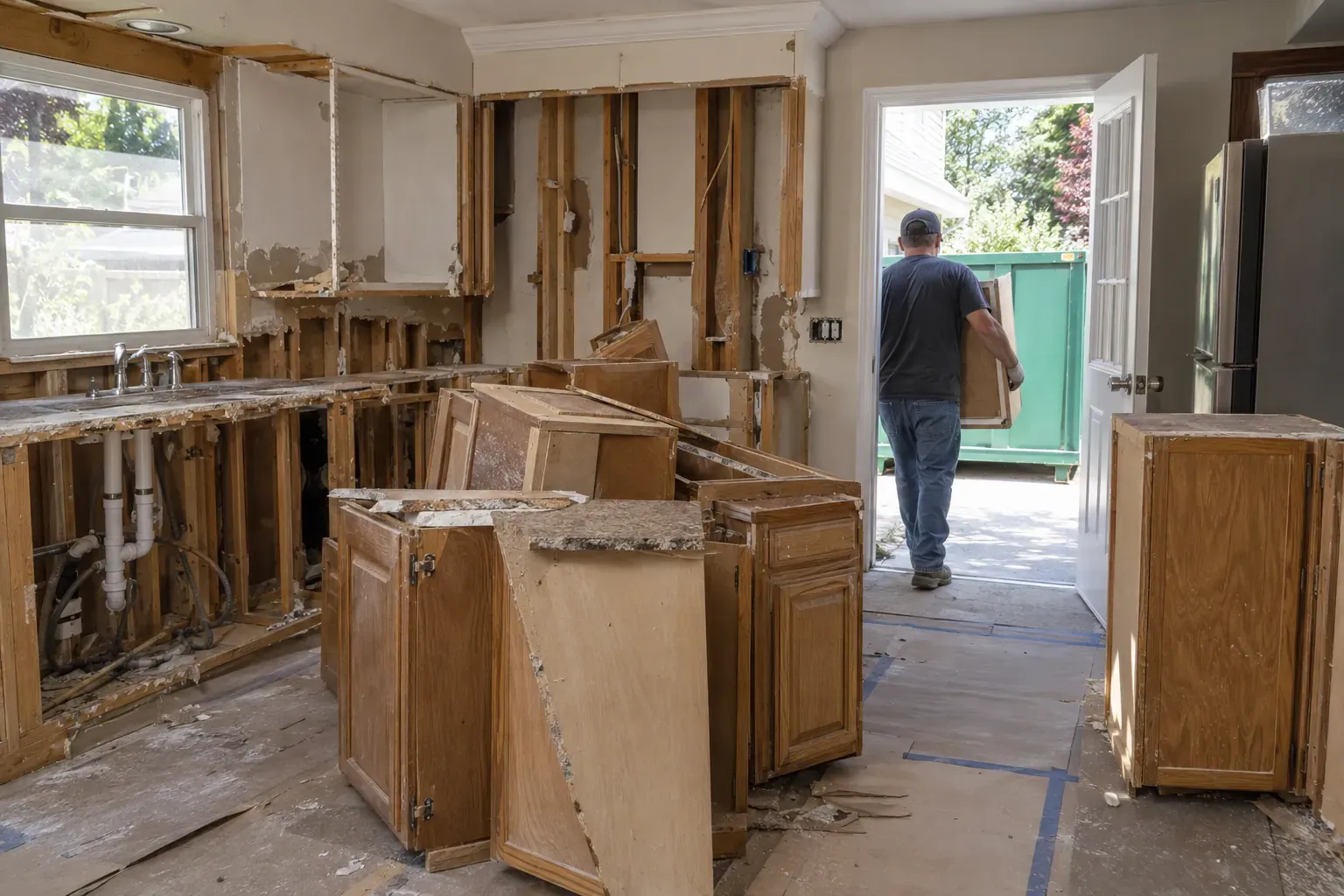
Interior demolition takes a space back to the framing: drywall, plaster, cabinets, flooring, tile, doors, fixtures. Plaster and tile make it heavier than it looks. A gutted kitchen is typically a 15 to 20-yard; a whole floor is a 30.
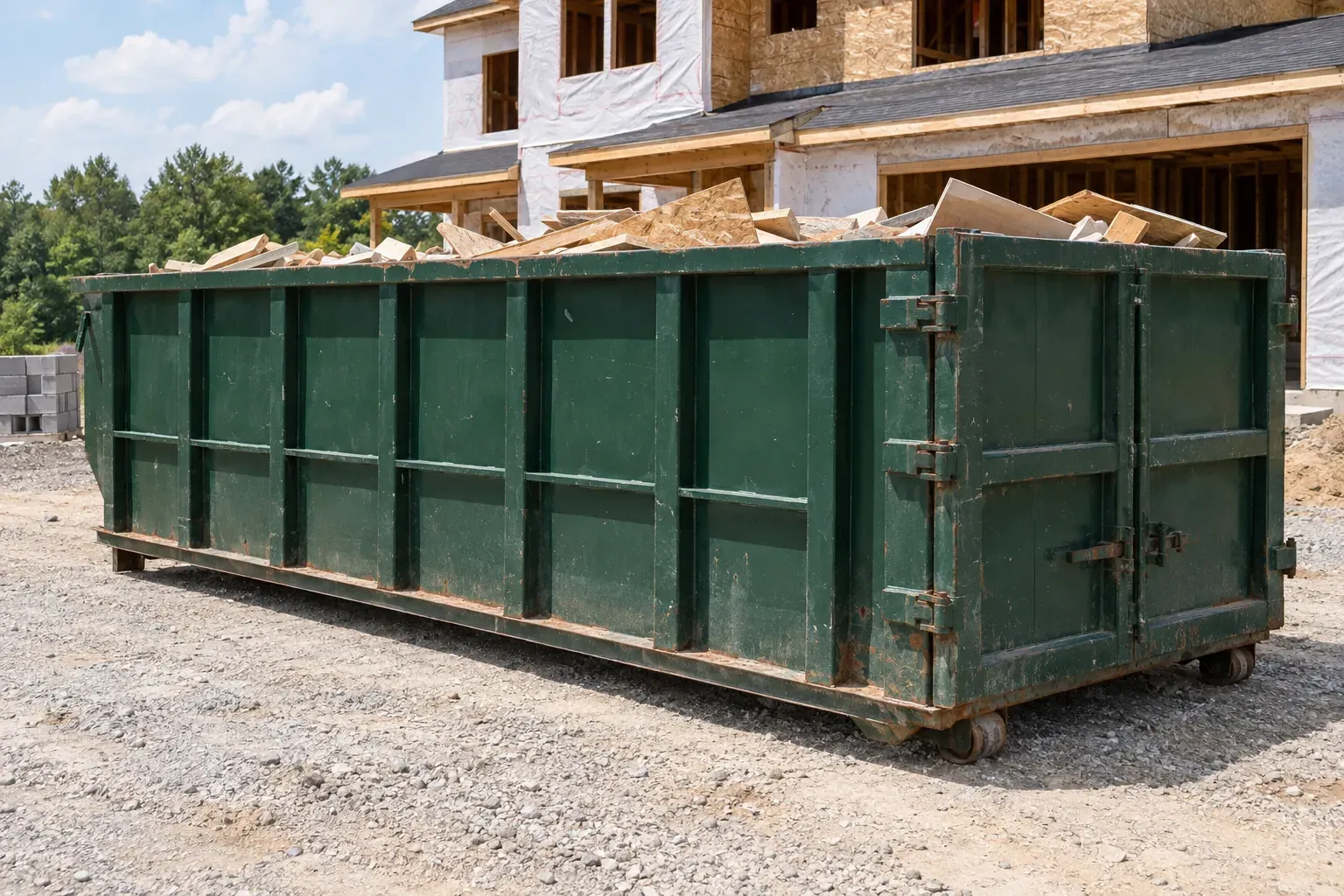
Structure demolition brings down walls and a roof: framing, sheathing, siding, roofing, windows, then whatever the building sat on. The above-ground part of a small house is 40-yard territory, often more than one. The foundation and slab are heavy debris and go in their own 10-yard boxes.
For the dumpster, the line that matters is light versus heavy, wherever the debris comes from.
Sizes for demolition work
| Size | Outside dimensions | Holds | Weight included | Typical 7-day price |
|---|---|---|---|---|
| 10-yard (heavy debris) | 12 x 8 x 3.5 ft | about 3 pickup loads | 1 to 2 tons | $325 to $550 |
| 30-yard | 22 x 8 x 6 ft | about 9 pickup loads | 3 to 4 tons | $450 to $800 |
| 40-yard | 22 x 8 x 8 ft | about 12 pickup loads | 3 to 4 tons | $525 to $950 |
Typical 7-day prices, not quotes; heavy loads, long rentals and high-cost areas can go above them. Your exact demolition dumpster rental price comes with your quote; see pricing for what is included.
- 20-yard: a gutted kitchen plus a bath, a large deck, a small shed.
- 30-yard: a whole floor of interior demo or a detached garage.
- 40-yard: the above-ground structure of a small house. Same 3 to 4-ton allowance as the 30, so it is for bulk, not weight.
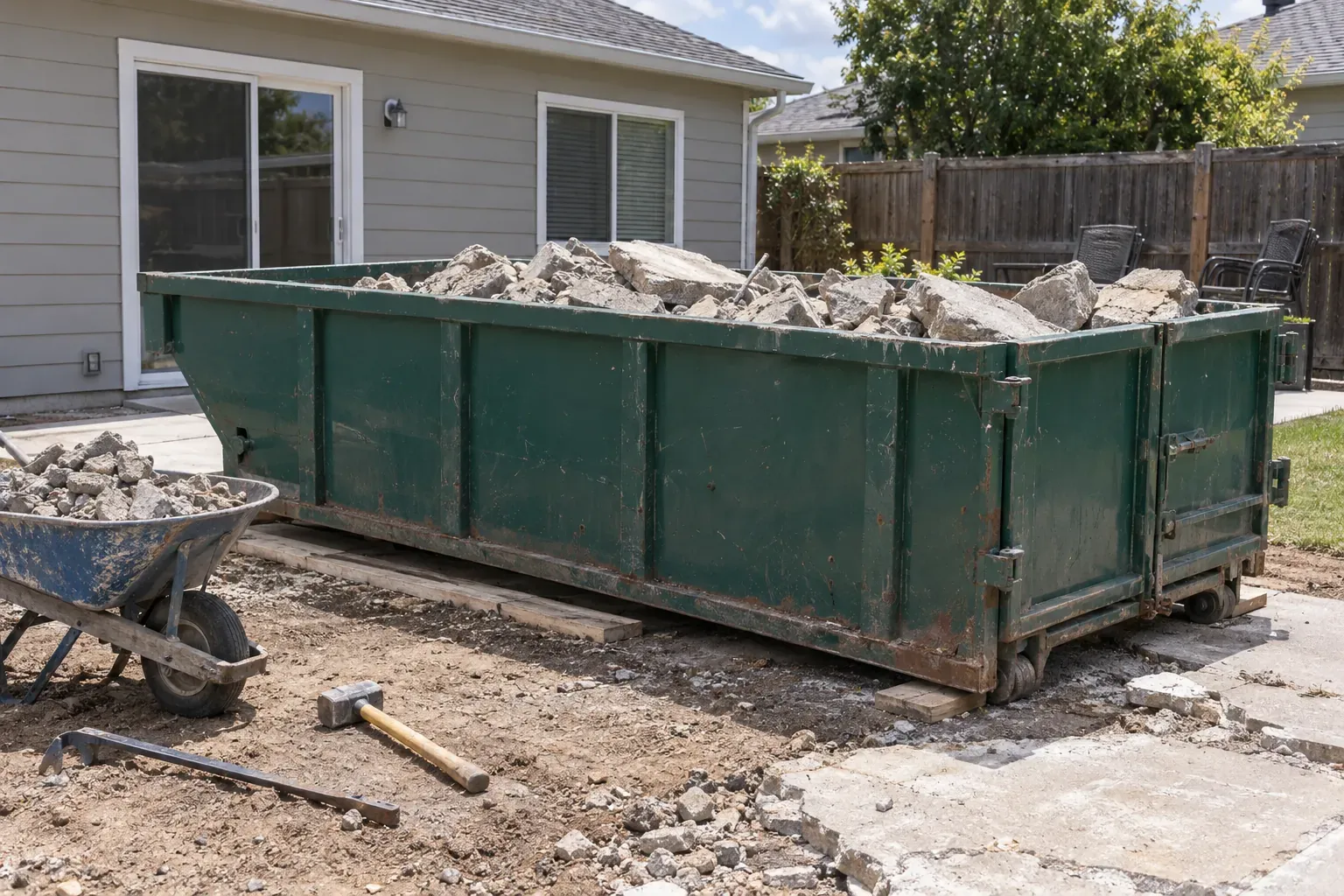
- 10-yard, filled to the line: every bit of concrete, block, brick, stone, asphalt, dirt and tile.
All five sizes are on the dumpster sizes page.
Mixed debris and weight: the part that bites
Demolition is where loads go over the weight allowance. A 30 or 40-yard typically includes 3 to 4 tons; overage runs about $50 to $125 per ton. Rough weights to plan around:
- Drywall: about 467 lb per loose cubic yard, so a 30-yard filled level with it would weigh roughly 7 tons
- Plaster and lath: often far heavier than drywall for the same wall area, so an older house needs a bigger allowance
- Solid concrete: about 2 tons per cubic yard
- Dirt, brick, tile and rock: about a ton or more per cubic yard
The last two lines go in a 10-yard on their own. A 30-yard with concrete in the bottom and framing on top is the most common way a demo job gets a weight bill and a refused pickup. A little tile in a mixed load is sometimes tolerated; two bathrooms of it is not. The concrete and dirt page and the weight limits guide go deeper.
What can go in, and what cannot
Fine in the big box: lumber, drywall, plaster, cabinets, flooring, carpet, doors, windows, siding, roofing, insulation. Separate 10-yard: concrete, block, brick, asphalt, dirt, tile.
Not allowed: paint, chemicals, fuel and propane, tires, batteries, fridges, freezers and AC units, electronics in many states, and asbestos. Demolition is where asbestos turns up: pipe insulation, 9x9 floor tiles, popcorn ceilings, some siding on pre-1980 buildings. If you suspect it, test before the first swing. Full list on the prohibited items page.
Multiple hauls and swaps
Most demo bigger than one room needs more than one box:
- Swaps. One 30 or 40-yard on site; when it fills, the hauler takes it and drops an empty one. Each swap is priced in your quote. Give 24 hours notice where you can.
- Two boxes at once. A 30 or 40 for light debris next to a 10-yard for heavy. Fewer swaps, and the heavy box often prices like a standard 10 because clean concrete is recycled.
Rental length: 3, 7, 14 or 30 days. A week handles most interior demo; structure demo usually runs 30. If the job will run longer, tell us in the quote request and we confirm how the rental continues, in writing, before you book.
Placement and permits
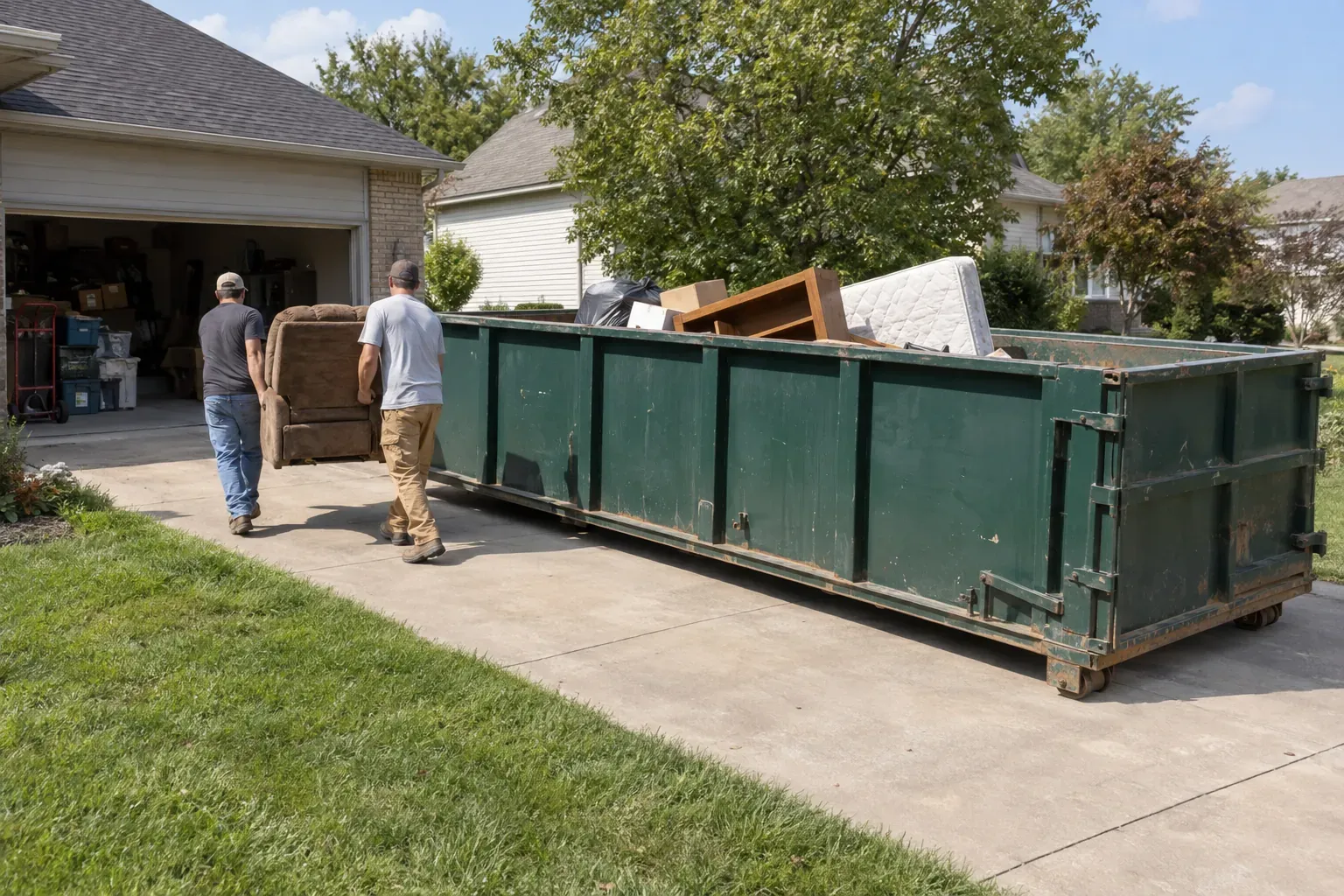
A 30 or 40 needs a flat spot about 22 feet long and 8 to 11 feet wide, roughly 60 feet of straight approach, and clear overhead. On a teardown, keep the box out of the drop zone. Ask for boards on any finished surface; our booking policies cover surface damage.
On private property you do not usually need a dumpster permit. On the street or an alley, most cities require a right-of-way permit. The demolition permit for the structure itself is a separate matter for your building department.
How it works in three steps
- Tell us the job. ZIP, what is coming down, rough square footage, any concrete or tile, and start date. The quote form takes about a minute.
- Get one exact price. A real person checks vetted haulers near you and sends one all-in number by text or email: box, allowance, per-ton rate, swap price, heavy box. We usually reply within 1-2 business hours.
- Say yes and start swinging. Delivery in 1 to 3 business days or on your date. Text us for swaps. One invoice per job.
How it works has the longer version.
A worked example
A homeowner is gutting a 1,200 sq ft ranch interior: all drywall, a kitchen, two tiled baths, carpet, and a cracked 10 x 12 concrete patio.
Plan: a 30-yard for the light debris, typically $450 to $800 for 7 days with 3 to 4 tons included, which covers the drywall, cabinets and carpet with margin. The tile and the patio, roughly 3 tons of concrete at 4 inches thick plus the tile on top, go in a 10-yard heavy-debris box filled to the line, typically $325 to $550. Both boxes land the same morning, side by side on the driveway on boards.
Why demo crews book through us
- Vetted, insured and bonded haulers. Every one of our haulers shows a current certificate of insurance and a bond before taking a job. How we vet haulers.
- One all-in price with the weight terms written down. Allowance, per-ton overage, swap price and extra days are in the quote.
- One point of contact. Swaps, a second heavy box, an extra week: text us. One invoice per job.
Find your metro on the locations page.
Get your exact price
Tell us your ZIP and what is going in. A real person texts or emails one all-in delivered price.
Get my priceFrequently Asked Questions
What size dumpster do I need for demolition?
A gutted kitchen or bath is a 15 to 20-yard, a full floor of interior demo a 30, and the above-ground structure of a small house a 40 with swaps. Concrete, block and brick go in a separate 10-yard.
How much does a demolition dumpster rental cost?
Typically $450 to $800 for a 30-yard and $525 to $950 for a 40-yard for 7 days, plus $325 to $550 per 10-yard heavy-debris box, with overage at about $50 to $125 per ton. Your quote gives one exact number.
Can I put concrete and drywall in the same dumpster?
Not in any real quantity. Concrete weighs about 2 tons per cubic yard and will put a mixed load over weight, possibly over what the truck can lift. Keep it in a 10-yard.
What about asbestos in an old house?
Any load with asbestos will be refused, and disturbing it without abatement is a health and legal problem. Test suspect materials before demolition; licensed abatement contractors handle disposal.
Can I get the dumpster the same day demo starts?
Sometimes, especially a 20 or 30-yard requested before noon. Typical delivery is 1 to 3 business days. The same-day dumpster rental page explains what helps.
Other projects
Sources and review
Written by Rob Whitaker and the Dumpster Dingo Team. First published ; figures last checked . Sizes and weights are typical figures, not quotes: your written quote has the final word. How we write and check our guides. Spotted a mistake? Tell us.
Get your exact delivered price
Tell us what is coming down; a real person sends one all-in price back.